Tomb Raiders: The History of Grave Robbing in Ancient Egypt (and Today)
Discover the dark history of grave robbing in ancient Egypt, from tomb raiders to modern looters — and how LOST SG brings this world to life in Singapore.
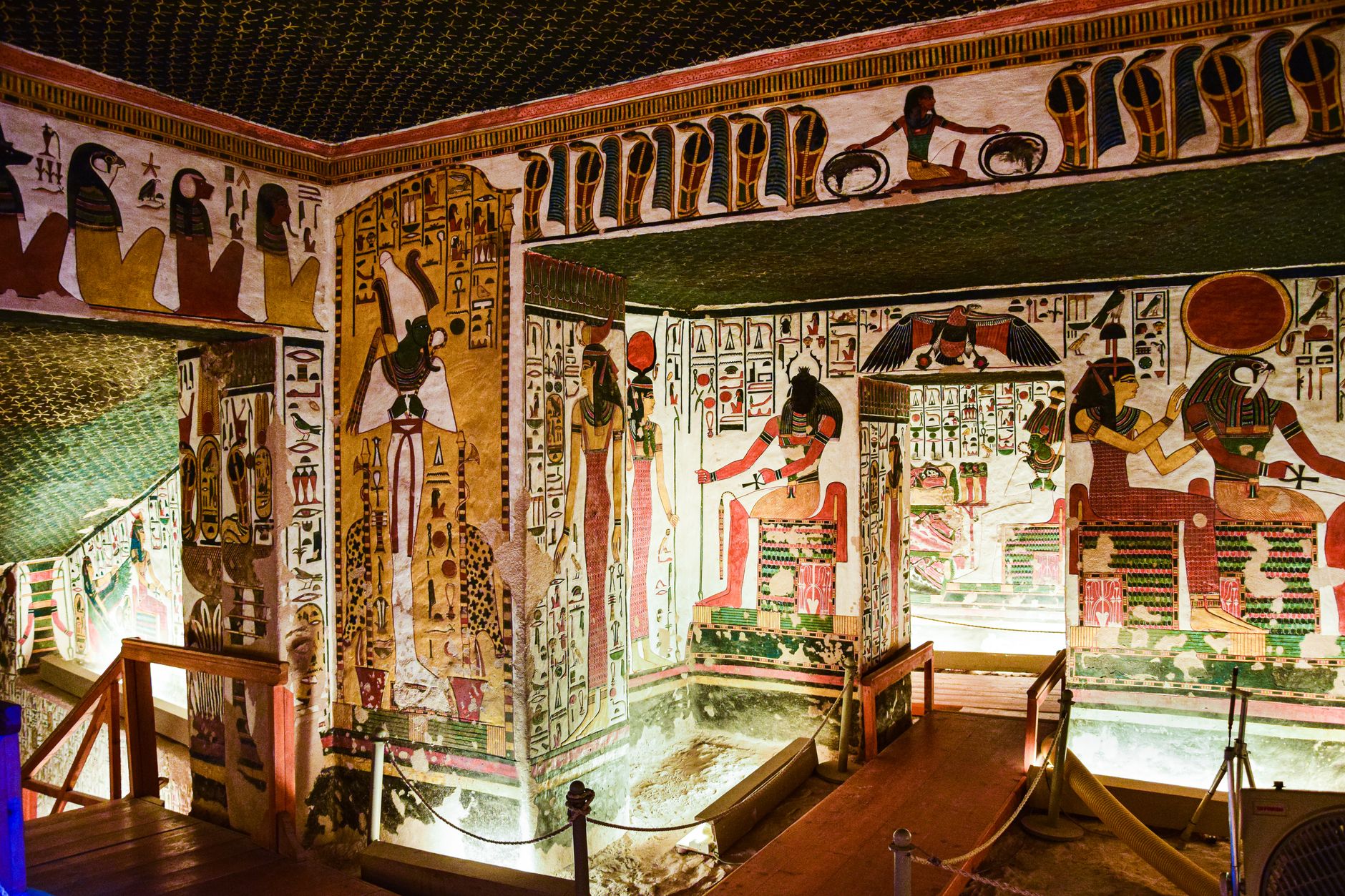
Few crimes in human history have been as persistent, audacious, or consequential as tomb raiding. From the sand-swept valleys of ancient Egypt to the black markets of modern-day antiquities dealers, the plundering of burial sites has spanned millennia — driven by greed, desperation, and an insatiable hunger for the treasures buried alongside the dead. It's a story that's equal parts archaeology, crime thriller, and cultural tragedy. And it's a story that still isn't over.
Why Ancient Egyptians Built Such Elaborate Tombs
To understand tomb raiding, you first need to understand why Egyptian tombs were worth raiding in the first place.
Ancient Egyptians believed fervently in the afterlife. Death wasn't an ending — it was a transition. The body needed to be preserved (hence mummification), and the deceased needed to be equipped for the journey ahead. That meant gold amulets, canopic jars, food offerings, weapons, furniture, jewellery, and sometimes entire boats. Pharaohs and nobles were buried with staggering quantities of wealth, all intended to serve them in the next world.
The pyramids of Giza, the royal tombs of the Valley of the Kings, the mastabas of Saqqara — these weren't just monuments to ego. They were functional facilities for the afterlife, stocked like warehouses of the divine. And that made them irresistible targets.
Tomb Robbing in Ancient Egypt: A Crime as Old as the Tombs Themselves
Here's the uncomfortable truth: tomb robbing began almost as soon as the tombs were sealed.
Archaeological evidence suggests that many royal tombs were looted within decades — sometimes within years — of burial. The Great Pyramid of Giza was found empty of its royal occupant long before modern archaeologists arrived. The tomb of Tutankhamun, famously "intact" when Howard Carter discovered it in 1922, actually showed evidence of two separate break-in attempts in antiquity.
Who Were the Tomb Raiders?
The perpetrators weren't always outsiders. Many were the very workers who built and maintained the tombs — people who knew the layouts, the hidden passages, and the locations of concealed chambers. Papyrus records from the Ramesside period (roughly 1186–1069 BCE) document formal trials of tomb robbers, including confessions that read like ancient heist scripts.
One famous account, the Abbott Papyrus, records an official investigation into the systematic looting of royal tombs near Thebes. The accused included stonecutters, water carriers, and even priests. The penalties were severe — mutilation, impalement — yet the robberies continued regardless.
Desperation played a role too. During periods of famine, drought, or political instability, the calculus changed. A gold ring from a dead pharaoh's finger could feed a family for months. Morality bends under hunger.
The Cat-and-Mouse of Tomb Architecture
The Egyptians weren't naive. Architects designed increasingly elaborate countermeasures: false doors, blind corridors, portcullises of granite, concealed entrances, and decoy chambers filled with dummy offerings. Some tombs were deliberately built without any visible entrance from the outside.
It became a centuries-long arms race between builders and breakers — a puzzle-within-a-puzzle that makes the tombs as fascinating to modern archaeologists as they were tempting to ancient thieves.
The Valley of the Kings: Ground Zero for Tomb Raiding
By the New Kingdom period (around 1550–1070 BCE), Egyptian rulers had abandoned pyramid building entirely — partly because pyramids were essentially giant neon signs screaming "treasure inside." Instead, they commissioned hidden tombs cut deep into the limestone cliffs of the Valley of the Kings near Luxor.
It didn't help much. Almost every tomb in the Valley of the Kings was robbed in antiquity. The priests of the 21st Dynasty eventually undertook a mass reburial operation, quietly moving royal mummies to hidden caches to protect what remained of them. One such cache, discovered at Deir el-Bahari in 1881, contained over 40 royal mummies — a last-ditch preservation effort made 3,000 years after the fact.
Howard Carter and the Tutankhamun Moment
The 1922 discovery of Tutankhamun's tomb by Howard Carter and Lord Carnarvon is perhaps the most famous archaeological event in history. The world held its breath as Carter peered through a small hole in the sealed door and described seeing "wonderful things."
What made Tutankhamun's tomb so extraordinary wasn't just its contents — it was that it was relatively intact. Even so, archaeologists found evidence of ancient intrusions, items hastily restacked, and resealed doors. Tutankhamun was a minor pharaoh. Imagine what the tombs of Ramesses II or Thutmose III must have contained before they were stripped.
The "Curse of the Pharaohs" — the legend that those who disturb royal tombs will suffer supernatural consequences — was largely a media invention following Carnarvon's death in 1923. But it speaks to the deep cultural unease that surrounds tomb raiding, even today.
Modern Tomb Raiding: The Problem Hasn't Gone Away
If you think grave robbing is a relic of antiquity, think again.
The illicit antiquities trade is a multi-billion-dollar global industry. Egypt, Iraq, Syria, Cambodia, Peru, and Greece are among the countries most severely affected. Looters with metal detectors, GPS devices, and even ground-penetrating radar now operate with a technological sophistication the ancient tomb builders never anticipated.
The Arab Spring of 2011 triggered a catastrophic wave of looting across Egypt. With security forces stretched thin, sites like Saqqara, Abydos, and the Egyptian Museum in Cairo were targeted. Thousands of artefacts disappeared into the black market, many of which surface years later at auction houses and in private collections.
The demand side of the equation is equally troubling. Wealthy collectors in Europe, North America, and Asia continue to purchase objects of uncertain provenance — a polite euphemism for "probably looted." Museums have faced mounting pressure to repatriate items acquired under dubious circumstances.
Digital Archaeology vs. Digital Looting
On the positive side, modern technology is also helping to fight back. Satellite imagery, drone surveys, and AI-assisted analysis allow archaeologists to monitor known sites and detect signs of illegal digging. International databases of stolen artefacts help customs officials and auction houses flag suspicious objects.
The battle continues — just with better tools on both sides.
From History to Experience: Mausoleum 2.0 at LOST SG
There's something about the mystery of ancient Egyptian tombs — the hidden chambers, the cryptic symbols, the sense that you're unravelling secrets buried for thousands of years — that captures the imagination like almost nothing else.
At LOST SG, we've channelled exactly that energy into Mausoleum 2.0, our beginner-friendly escape room set inside an ancient Egyptian tomb. Your team must decode hieroglyphic clues, navigate the traps of a long-dead pharaoh's burial chamber, and escape before time runs out. It's the closest most of us will ever get to the thrill of discovery — without the ethical (or legal) complications of actual tomb raiding.
If you're new to escape rooms and want to experience that rush of uncovering ancient secrets, check out our First-Timer's Complete Guide to Escape Rooms in Singapore before you book. And if your group has already done a few rooms and wants to sharpen your approach, our Advanced Escape Room Strategies for Experienced Players in Singapore is worth a read.
LOST SG is located at GR.iD, 1 Selegie Road, #B1-03/04, Singapore 188306 — just minutes from Dhoby Ghaut, Little India, and Bencoolen MRT stations. All rooms are fully private, run for 60 minutes, and accommodate 2–12 players. Pricing starts from $23.90/pax.
If the ancient Egypt theme has you intrigued but you're wondering what else LOST SG has to offer, take a look at our Top 10 Escape Room Singapore Adventures You Must Try In 2026 — from a prison breakout to a horror-themed forest in Japan.
The Enduring Fascination With What Lies Buried
Tomb raiding endures in our cultural imagination for a reason. It sits at the intersection of adventure, forbidden knowledge, and mortality. Indiana Jones, Lara Croft, the thieves of the Abbott Papyrus — they're all chasing the same thing: the sense that the past has secrets worth risking everything to uncover.
The difference between an archaeologist and a tomb raider is, in the end, one of intention. One seeks to understand; the other seeks to possess. The tombs of ancient Egypt were built to last forever — and in a way, they have, precisely because enough people cared about what they contained to preserve rather than plunder them.
The next time you stand before an Egyptian artefact in a museum, consider the journey it took to get there — the hands that made it, the priests who sealed it away, the thieves who tried to take it, and the scholars who finally brought it into the light.
Or, if you'd rather experience that journey in 60 minutes with your friends, you know where to find us.
FAQ
Q: Were tomb robbers in ancient Egypt ever caught and punished?
Yes. Papyrus records from the Ramesside period document formal legal proceedings against tomb robbers. Punishments were harsh and included mutilation and impalement. Despite this, looting remained widespread — particularly during periods of economic hardship or political instability.
Q: Was Tutankhamun's tomb really untouched when Howard Carter found it?
Not entirely. While it was the most intact royal tomb ever discovered, archaeologists found evidence of at least two ancient break-in attempts. Items had been disturbed and hastily restacked, and the tomb's outer doors had been resealed. It was remarkably well-preserved compared to other royal tombs, but not completely untouched.
Q: Is the illicit antiquities trade still a serious problem today?
Absolutely. The illegal trade in stolen artefacts is estimated to be worth billions of dollars annually. Egypt, Syria, and Iraq have been particularly hard hit, especially following periods of political instability. International organisations and governments are working to combat looting through satellite monitoring, legal frameworks, and repatriation efforts.
Q: What is the Mausoleum 2.0 escape room at LOST SG like?
Mausoleum 2.0 is a beginner-friendly escape room set in an ancient Egyptian tomb. Players must solve puzzles, decode clues, and navigate the mysteries of a pharaoh's burial chamber within 60 minutes. It accommodates 2–12 players, is fully private, and is a great introduction to escape rooms for first-timers or families.
Q: How do I book an escape room at LOST SG?
You can book online at https://bookeo.com/lostsg or call +65 6717 1688 / +65 6255 0095. LOST SG is open daily from 10:00am to 10:30pm (last game at 9:30pm), located at GR.iD, 1 Selegie Road, #B1-03/04, Singapore 188306.