Alcatraz Breakout: The True Story Behind the Escape Room
Discover the true story behind the 1962 Alcatraz escape — and how LOST SG's prison escape room singapore brings that legendary breakout to life.
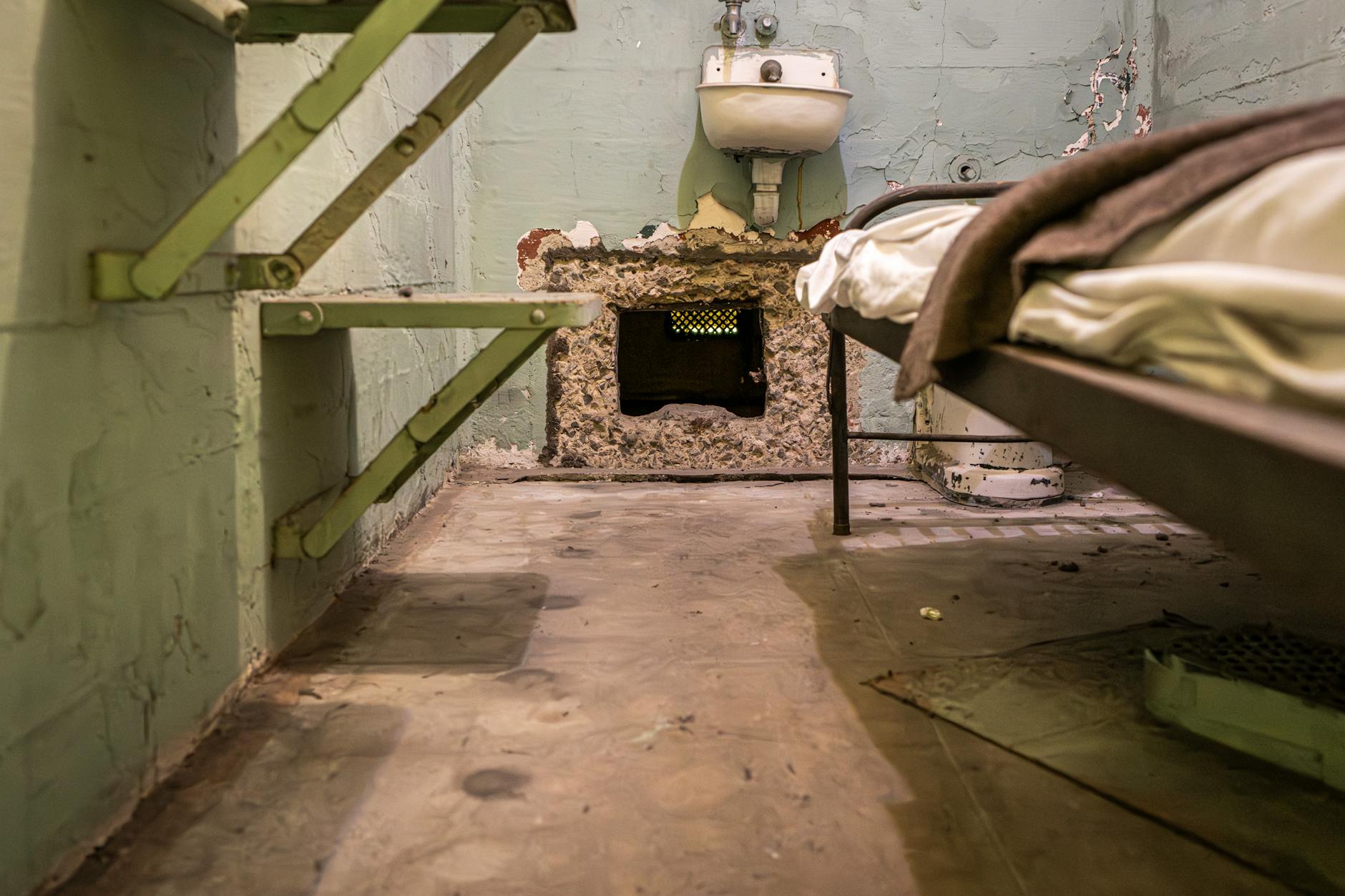
There’s a reason the 1962 Alcatraz escape has never been officially closed. Decades later, the FBI still lists the case as active. Three men vanished from the most secure prison in American history, and nobody — not the guards, not the investigators, not the Coast Guard — could definitively say what happened to them. That unresolved mystery is exactly what makes it such compelling material for an escape room.
At LOST SG, our prison escape room singapore is inspired by that story. But before you step inside and attempt what Frank Morris and the Anglin brothers pulled off in real life, it’s worth understanding just how audacious — and meticulously planned — the original breakout actually was.
The Prison That Was Never Supposed to Be Escapable
Alcatraz Federal Penitentiary sits on a rocky island in the middle of San Francisco Bay. The water surrounding it is bitterly cold, the currents are brutal, and the distance to shore is just over a mile — but that mile might as well have been a hundred in those conditions. From 1934 to 1963, it housed some of America’s most dangerous and difficult-to-manage criminals, including Al Capone and Robert Stroud, the “Birdman of Alcatraz.”
The Bureau of Prisons marketed it as escape-proof. In 29 years of operation, 36 men attempted to escape. Most were caught immediately. Some drowned. A few were shot. None were ever confirmed to have made it.
Until, possibly, June 11, 1962.
The Men Behind the Plan
Frank Morris
Frank Morris had an IQ estimated at 133 — well above average, and certainly well above what the prison system expected from an inmate. He’d been escaping facilities since he was a teenager, which is precisely why he ended up in Alcatraz. He was considered too clever and too resourceful for any other institution to hold.
Morris was the architect of the 1962 escape. He recruited brothers John and Clarence Anglin, who had grown up swimming in cold Georgia rivers and were known for their physical endurance. A fourth inmate, Allen West, was also part of the plan — though he ultimately didn’t make it out.
The Anglin Brothers
John and Clarence Anglin were bank robbers who had attempted escapes from other prisons before being transferred to Alcatraz. They were close-knit, disciplined, and willing to put in the long, patient work that Morris’s plan required. That patience would prove to be the key ingredient.
The Plan Itself: A Masterclass in Ingenuity
The escape took over a year to execute. That’s not an exaggeration — the preparation began in 1961 and culminated on the night of June 11, 1962.
The Utility Corridor
Behind each cell in B and C Block ran a narrow utility corridor. The walls separating the cells from this corridor were old, moisture-damaged concrete — not the reinforced material you might expect. Morris discovered that with enough patience and a makeshift drill (fashioned from a stolen vacuum cleaner motor), the concrete could be chipped away.
Each night, the men worked quietly during the “music hour” — a period when inmates were allowed to play instruments, which conveniently masked the sound of digging.
The Dummy Heads
This is the detail that captures everyone’s imagination. To fool the guards during nightly head counts, the men crafted remarkably lifelike dummy heads from a mixture of soap, toilet paper, and real human hair collected from the prison barbershop. They painted the heads with flesh-toned paint and placed them in their beds before disappearing into the utility corridor.
The guards didn’t notice until morning.
The Raft
Morris and the Anglins had been secretly collecting over 50 raincoats, which they stitched together to create an inflatable raft and life preservers. They used a concertina (a small accordion-like instrument) to inflate it. The craftsmanship was crude but functional — at least, that was the theory.
The Night of the Escape
On June 11, the three men climbed through their excavated wall openings, made their way up to the roof via the utility corridor, and descended to the water’s edge. They launched their makeshift raft into San Francisco Bay.
And then — nothing. They were never seen again.
What Happened to Them?
This is where history becomes legend.
The FBI investigated for 17 years before officially suspending the case in 1979, though it was never closed. The official position remains that the men most likely drowned in the bay. Supporting evidence includes a paddle and personal belongings found on nearby Angel Island, as well as a fragment of raincoat material.
But there’s a persistent counter-narrative.
In 2013, a letter surfaced claiming to be from John Anglin, written to the San Francisco Police Department. The letter described a life lived in hiding, claimed all three men had survived, and offered to turn himself in in exchange for medical treatment. Handwriting analysis was inconclusive.
The Anglin family has long maintained that the brothers survived. They claim to have received Christmas cards signed by the brothers well into the 1970s, and say a photograph taken in Brazil in 1975 shows two men who look remarkably like John and Clarence Anglin — older, but alive.
The US Marshals Service, which took over the case from the FBI, continues to investigate. As recently as 2018, they stated they still consider the case open.
Why This Story Works So Well as an Escape Room
The Alcatraz escape endures not just because it’s unsolved, but because of how it was done. It wasn’t brute force. It wasn’t luck. It was observation, patience, creativity, and teamwork stretched over months of careful planning.
Those are exactly the qualities that make a great escape room player.
When you step into LOST SG’s Alcatraz room, you’re not just solving puzzles — you’re inhabiting a mindset. The pressure of the clock mirrors the pressure of the guards’ rounds. The need to communicate with your team echoes the trust that Morris placed in the Anglins. And the satisfaction of finding a hidden mechanism or cracking a code? That’s the closest most of us will ever get to what those men must have felt when they finally broke through that wall.
If you’re looking for fun activities in singapore that go beyond the ordinary, a historically grounded escape room offers something genuinely different — context, narrative, and stakes that feel real because they once were.
How to Experience It for Yourself
LOST SG is located at GR.iD, 1 Selegie Road, just a short walk from Dhoby Ghaut MRT (CC1/NE6/NS24). The Alcatraz room is one of several experiences we offer, ranging from beginner-friendly to genuinely challenging.
It’s also a fantastic option for groups — whether you’re planning a birthday outing, a date night, or a corporate team building singapore session where the goal is to see how your colleagues perform under pressure. (Spoiler: you’ll learn a lot about each other in 60 minutes.)
Ready to attempt your own breakout? Book your session and see if your team has what it takes.
Frequently Asked Questions
Q: Is the Alcatraz escape room at LOST SG suitable for first-timers?
A: The Alcatraz room is designed for players with some escape room experience — it’s not our most beginner-friendly option, but it’s not the hardest either. If your group is completely new to escape rooms, you might want to start with a slightly more accessible room and work your way up. Our staff are happy to advise when you book.
Q: Do I need to know the history of Alcatraz to enjoy the room?
A: Not at all. The room works as a standalone experience. That said, knowing the real story behind the 1962 escape does add an extra layer of immersion — which is exactly why we wrote this article.
Q: How many people can play the Alcatraz room at LOST SG?
A: We can fit a max of 12 pax!