The Curse of Tutankhamun: What Really Happened to Howard Carter’s Team
Uncover the real story of Tutankhamun's curse and how it inspired LOST SG's Mausoleum 2.0 escape room in Singapore. History, mystery, and adventure await.
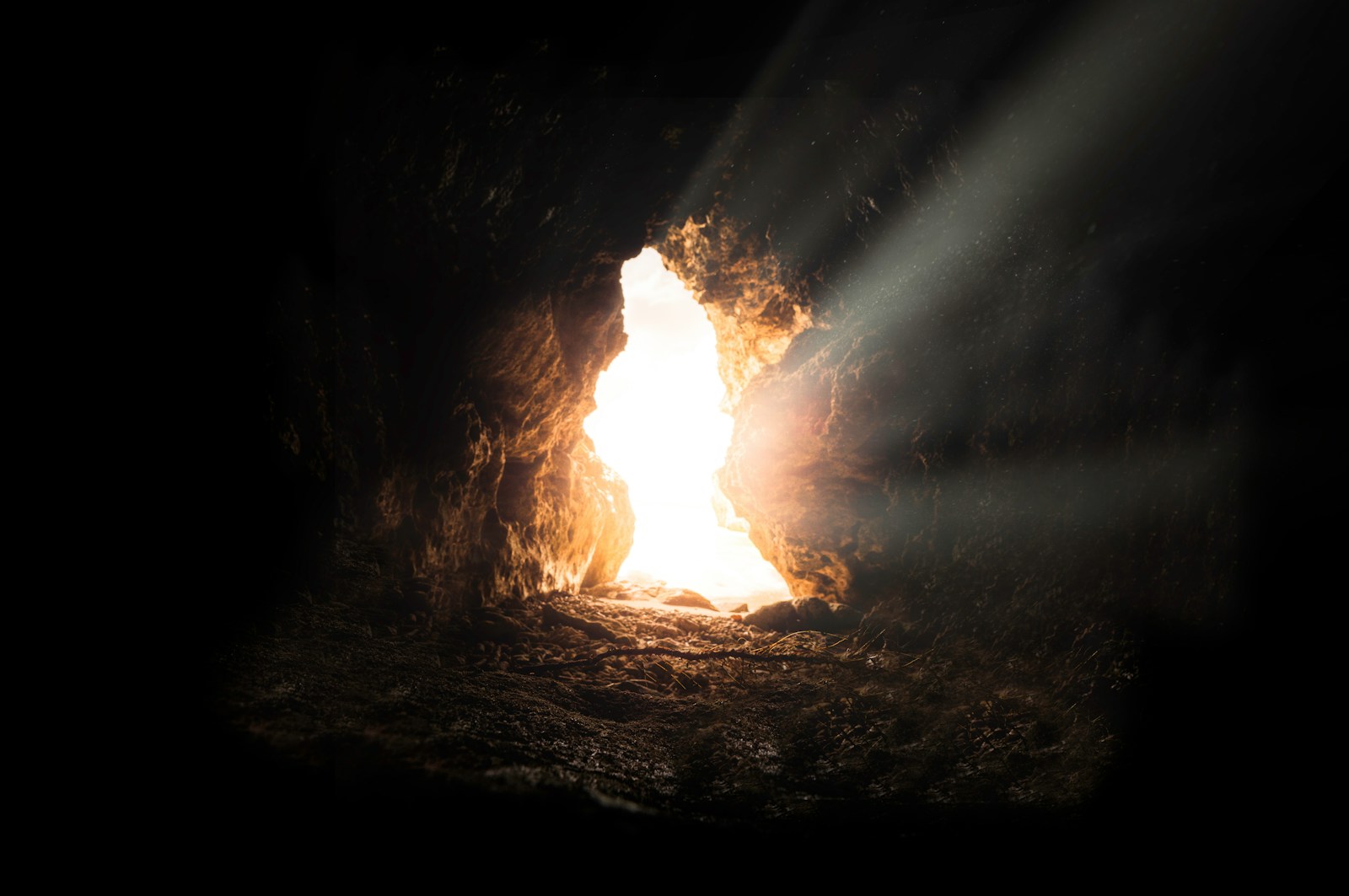
Few stories in modern history have captured the human imagination quite like the opening of Tutankhamun's tomb in 1922. The discovery of the boy pharaoh's burial chamber deep in Egypt's Valley of the Kings sent shockwaves through the archaeological world — and then, one by one, members of the expedition began to die under strange circumstances. Was it a genuine ancient curse? A cunning piece of media fabrication? Or something altogether more fascinating?
Here's the full story — and why it still haunts us more than a century later.
The Discovery That Changed Everything
On 4 November 1922, British archaeologist Howard Carter and his team uncovered a stone step beneath the sand of the Valley of the Kings near Luxor, Egypt. After years of fruitless searching, funded by the wealthy Lord Carnarvon, Carter had finally found something extraordinary.
Within days, they had cleared a corridor and stood before a sealed doorway. Carter made a small hole, held up a candle, and peered inside. When Lord Carnarvon asked if he could see anything, Carter reportedly replied: "Yes, wonderful things."
What they found was the nearly intact tomb of Pharaoh Tutankhamun — a teenage king who had ruled Egypt around 1332–1323 BCE. The burial chamber contained over 5,000 artefacts: gilded furniture, jewellery, weapons, and the now-iconic golden death mask that has become one of the most recognised objects in human history.
But it was what allegedly came after the opening that gripped the world's press.
The "Curse" Begins: Lord Carnarvon's Death
On 5 April 1923 — just five months after the tomb was opened — Lord Carnarvon died in Cairo. He was 57 years old. The cause was blood poisoning following an infected mosquito bite, aggravated by pneumonia.
The timing was enough to send the tabloid press into a frenzy. Stories circulated that at the exact moment of Carnarvon's death, all the lights in Cairo mysteriously went out. His dog back in England reportedly howled and dropped dead at the same hour. Whether any of this was true barely mattered — the narrative of the Curse of the Pharaohs had taken on a life of its own.
Some reports even claimed that a clay tablet found in the tomb read: "Death shall come on swift wings to him who disturbs the peace of the King." No such inscription has ever been verified by Egyptologists, and Carter himself was notably sceptical of the entire curse mythology.
How Many People Actually Died?
This is where history gets genuinely interesting — and where sensationalism begins to unravel under scrutiny.
A 2002 study published in the British Medical Journal examined 44 Westerners who were in Egypt at the time of the tomb's opening. Of those who were actually present at the opening, their average age at death was 73. Those who weren't present died at an average age of 75. Statistically, there was no meaningful difference.
Howard Carter himself — the man who physically entered the tomb first, touched the mummy, and spent more time inside the burial chamber than anyone — lived until 1939, dying at the age of 64 from lymphoma. Hardly the swift vengeance of an ancient pharaoh.
Arthur Callender, who helped Carter open the inner chamber, lived into his 60s. Alan Gardiner, who studied the hieroglyphics, lived to 84. The evidence simply does not support the idea of a supernatural curse claiming lives indiscriminately.
So Why Did People Believe It?
The Power of Selective Reporting
Confirmation bias played a massive role. When someone connected to the excavation died — regardless of age, health, or how tangential their connection to the tomb — it was reported as a victim of the curse. When they lived long and healthy lives, that wasn't news.
Arthur Conan Doyle's Influence
The creator of Sherlock Holmes was, paradoxically, a fervent believer in the supernatural. Conan Doyle publicly suggested that Carnarvon's death was the work of "elementals" — ancient spirits placed by Egyptian priests to guard royal tombs. Given his enormous fame, his comments were widely reported and lent an air of credibility to what was, essentially, tabloid mythology.
The Timing Was Perfect
The 1920s were a period of intense public fascination with the occult. Spiritualism was popular across Europe and America, partly as a response to the trauma of the First World War. A mysterious ancient curse fit perfectly into the cultural moment.
What Science Has Suggested
More recent theories have attempted to find a rational explanation for the deaths. Some researchers have proposed that ancient tombs could harbour dangerous moulds, bacteria, or even toxic gases — particularly ammonia and hydrogen sulphide — that had been sealed inside for millennia. A person with a weakened immune system, like Lord Carnarvon, might conceivably have been affected by such pathogens.
Egyptologist Dr. John Foster and others have found traces of Aspergillus niger and Aspergillus flavus — potentially harmful fungal spores — in some Egyptian tombs. While not conclusive, it's a far more plausible explanation than a supernatural hex.
Howard Carter: The Sceptic Who Stayed
It's worth pausing to appreciate the man at the centre of it all. Howard Carter spent a decade excavating the Valley of the Kings before his breakthrough. He was meticulous, scientifically minded, and deeply irritated by the curse mythology that overshadowed his life's work.
He continued excavating Tutankhamun's tomb for a full decade after the discovery, cataloguing and preserving thousands of artefacts with extraordinary care. If there was a curse, Carter seemed entirely immune to it — or simply refused to acknowledge its existence.
His legacy is the careful, respectful documentation of one of the greatest archaeological finds in history. The curse, by contrast, was largely the creation of a press hungry for sensation.
The Enduring Appeal of the Pharaoh's Curse
Even knowing all of this, the story refuses to die. And perhaps that's fitting. Ancient Egypt was a civilisation that understood the power of mystery, ritual, and the unknown better than almost any other. The priests who designed the tombs of the pharaohs wanted people to feel fear. They lined burial chambers with warnings, filled them with traps, and constructed labyrinths designed to disorient intruders.
In a sense, the curse worked — just not in the way anyone expected. It worked by making the world pay attention, by ensuring that the name Tutankhamun would echo through the centuries long after the boy king himself was dust.
If you want a taste of that ancient tension — the sealed chamber, the hidden clues, the race against time — LOST SG's Mausoleum 2.0 captures that atmosphere in a beginner-friendly 60-minute adventure set in an ancient Egyptian tomb. It's the closest most of us will ever get to the Valley of the Kings, without the risk of fungal spores.
For those who want to sharpen their puzzle-solving instincts before stepping inside, check out these advanced escape room strategies for experienced players in Singapore — because even beginner rooms reward sharp thinking.
And if you're planning your first visit, the First-Timer's Complete Guide to Escape Rooms in Singapore will tell you everything you need to know before you walk through the door.
Experience the Mystery at LOST SG
LOST SG is located at GR.iD, 1 Selegie Road, #B1-03/04, Singapore 188306 — just minutes from Dhoby Ghaut, Bencoolen, and Little India MRT stations. The venue is open daily from 10:00am to 10:30pm, with the last game starting at 9:30pm.
All five rooms at LOST SG are fully private, meaning your group will never be combined with strangers. Mausoleum 2.0 accommodates 2 to 12 players and is ideal for first-timers, families, or anyone with a love of ancient history. Pricing starts from $23.90 per person.
Book your session at bookeo.com/lostsg or call +65 6717 1688.
FAQ: The Curse of Tutankhamun and Escape Rooms in Singapore
Q: Was the Curse of Tutankhamun real?
A: Historically, the evidence does not support a genuine curse. Studies show that those present at the tomb's opening lived to average or above-average ages. The "curse" was largely a media creation, amplified by the cultural fascination with the occult in the 1920s.
Q: How did Howard Carter die?
A: Howard Carter died in 1939 at the age of 64 from lymphoma — more than 16 years after opening the tomb. He was notably sceptical of the curse mythology throughout his life.
Q: What is Mausoleum 2.0 at LOST SG?
A: Mausoleum 2.0 is a beginner-level escape room at LOST SG inspired by the mystery of ancient Egyptian tombs. It accommodates 2 to 12 players and runs for 60 minutes. It's a great introduction to escape rooms for first-timers and history enthusiasts alike.
Q: Is LOST SG suitable for families or younger players?
A: Yes. LOST SG welcomes players aged 10 and above. Players under 16 must be accompanied by an adult. Mausoleum 2.0 is a non-horror room and is well-suited to family groups.
Q: Where is LOST SG located and how do I book?
A: LOST SG is at GR.iD, 1 Selegie Road, #B1-03/04, Singapore 188306. The nearest MRT stations are Dhoby Ghaut, Bencoolen, and Little India. You can book online at bookeo.com/lostsg or call +65 6717 1688. The venue is open daily from 10:00am to 10:30pm.