Yurei, Kuchisake-onna and Oni: Japan’s Most Terrifying Supernatural Legends
Discover Japan's scariest supernatural legends — Yurei, Kuchisake-onna, and Oni — and experience the terror firsthand at LOST SG's Aokigahara escape room.
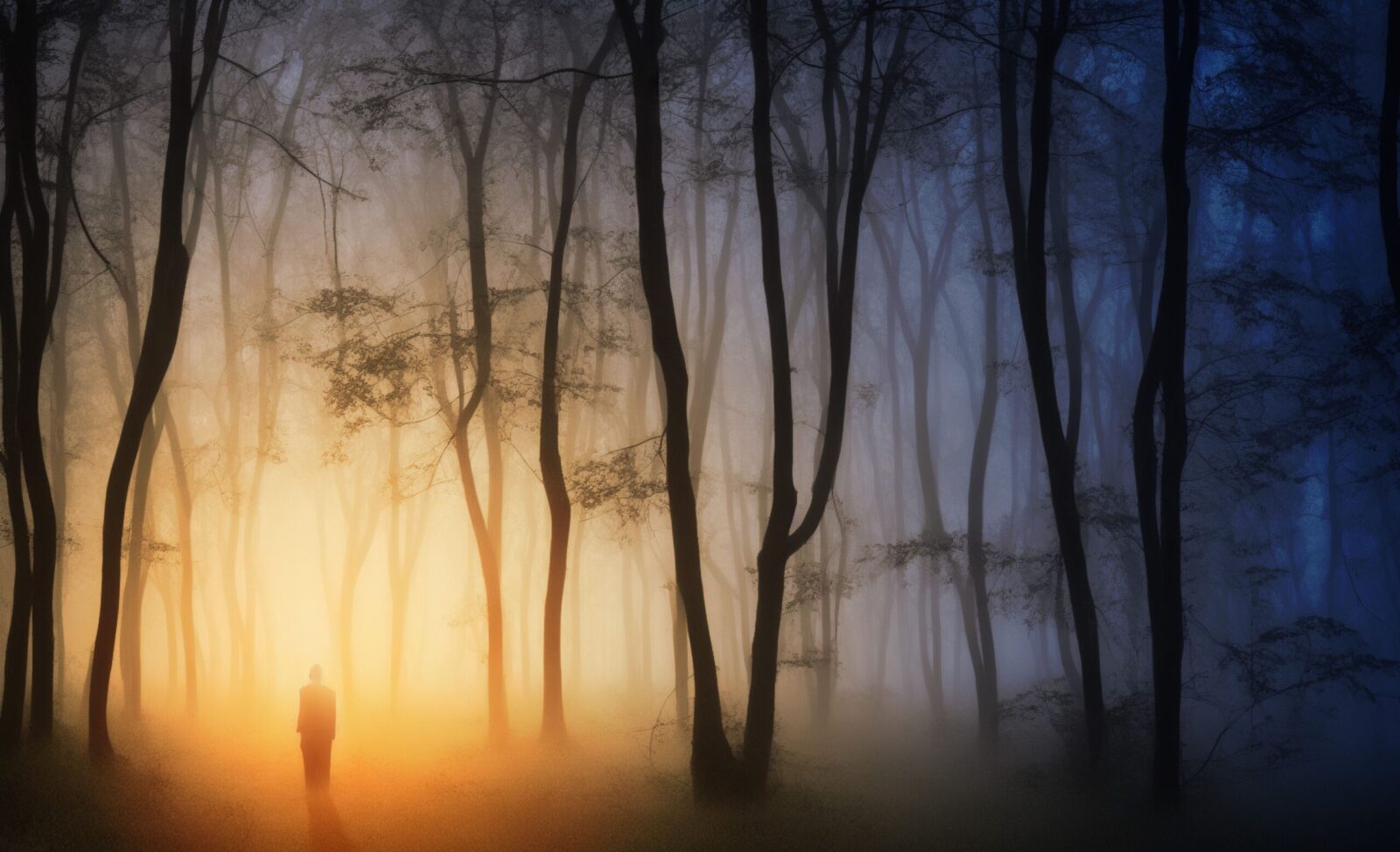
Japan has given the world some of its most enduring horror. From the pale, hair-draped ghost crawling out of a television screen to the grinning figure lurking on a lonely road at midnight, Japanese supernatural folklore has a way of burrowing under your skin and staying there. These aren't just campfire stories — they're deeply rooted in centuries of Shinto belief, Buddhist cosmology, and a cultural understanding that the boundary between the living and the dead is far thinner than we'd like to think.
If you've ever felt genuinely unsettled by a Japanese horror film, chances are the director drew directly from these legends. Here's a deep dive into three of Japan's most terrifying supernatural figures — and why they still haunt us today.
Yurei: The Vengeful Dead Who Cannot Rest
What Is a Yurei?
The word yurei (幽霊) translates roughly as "dim spirit" or "faint ghost." In Japanese belief, when a person dies consumed by powerful negative emotions — rage, jealousy, sorrow, or an unquenched desire for vengeance — their soul (rei) cannot complete its journey to the afterlife. Instead, it lingers in the physical world as a yurei, tethered to the place, person, or unresolved grievance that keeps it earthbound.
The classic visual image is unmistakable: long black hair hanging loose over the face, white funeral robes (katabira), limp dangling hands, and a way of moving that defies natural physics. This image was codified in Edo-period kabuki theatre and ukiyo-e woodblock prints, most famously by artist Katsushika Hokusai, and it has barely changed since.
The Different Types of Yurei
Not all yurei are the same. Japanese folklore categorises them by the emotion that binds them:
- Onryō — the most feared type, driven by jealousy and vengeance. The onryō can cause physical harm to the living. Sadako from Ring and Kayako from Ju-On are both onryō.
- Goryō — aristocratic or warrior spirits who died violently and now send plagues, disasters, or misfortune upon their enemies and the wider world.
- Funayūrei — the ghosts of those who drowned at sea, said to approach ships at night and beg for a ladle, then use it to fill the vessel with water until it sinks.
- Zashiki-warashi — a gentler child spirit that brings fortune to the household it haunts, though its departure is said to signal ruin.
Why Yurei Still Terrify Us
The power of the yurei legend lies in its emotional logic. These aren't random monsters — they're people who were wronged, abandoned, or consumed by grief. Their horror is deeply human. You cannot fight a yurei with a weapon. You can only resolve the injustice that created it, which is often impossible because the wrongdoer is long dead.
Kuchisake-onna: The Slit-Mouthed Woman
The Legend
Kuchisake-onna (口裂け女) — the Slit-Mouthed Woman — is one of Japan's most persistently terrifying urban legends, and unlike many folklore figures, she has a clear modern origin point. Reports of her first swept through Japan in 1979, causing genuine mass panic. Schools reportedly dismissed children early. Parents refused to let children walk home alone. Police were called.
The story goes like this: a woman approaches you on a quiet street at night, wearing a surgical mask (common in Japan for illness or pollution). She asks: "Am I pretty?" If you say no, she kills you with the scissors or scythe she carries. If you say yes, she removes the mask to reveal her mouth, sliced ear to ear in a permanent, grotesque grin, and asks again: "Even now?" There is no safe answer. Say no, and she kills you. Say yes, and she follows you home and kills you there.
Origins and Theories
Some researchers trace Kuchisake-onna to older Japanese folklore about yokai with distorted or exaggerated mouths. Others connect her to the samurai era, where a jealous husband supposedly mutilated his unfaithful wife's face. The 1979 outbreak, however, is thought to have been amplified by social anxieties of the time — rapid urbanisation, the anonymity of city life, and fears about violence against women.
What makes her particularly chilling is the surgical mask. In contemporary Japan, masks are mundane and unremarkable. The legend weaponises something utterly ordinary.
Modern Appearances
Kuchisake-onna has appeared in numerous Japanese horror films, manga, and video games. She represents a specific kind of dread: the danger that looks normal until it doesn't. The stranger who seems fine until they aren't. In a densely populated city, that fear is always close to the surface.
Oni: Ancient Demons of Punishment and Chaos
What Is an Oni?
Oni (鬼) are perhaps the most visually iconic supernatural beings in Japanese culture — towering, muscular demons with wild hair, curved horns, and iron clubs (kanabō). They are typically depicted in red or blue, wearing tiger-skin loincloths, and they represent raw, destructive force.
Unlike the yurei or Kuchisake-onna, oni are not human in origin. They are primordial supernatural beings who serve as agents of punishment in the Buddhist underworld, torturing sinners under the command of Emma-O, the king of hell. They also roam the earthly realm, bringing disease, disaster, and misfortune.
Oni in Ritual and Culture
Despite their terrifying reputation, oni occupy a fascinating dual role in Japanese culture. The Setsubun festival, held every February, involves throwing roasted soybeans while shouting "Oni wa soto! Fuku wa uchi!" ("Demons out! Fortune in!") — a ritual to drive oni from the home and welcome good luck for the new year.
Oni also appear as protectors. Some shrines and temples use oni imagery as guardians, placed at entrances to ward off evil spirits. In this sense, they are the monster that keeps other monsters away.
The Oni as Moral Enforcer
The deeper cultural function of the oni is as a moral enforcer. They punish the wicked, they test the brave, and they represent the consequences of a life lived without virtue. In many folk tales, a hero who defeats an oni does so not through brute strength but through cleverness, honesty, or compassion — qualities the oni fundamentally lacks.
From Legend to Experience: Aokigahara at LOST SG
These legends don't just live in books and films. They live in places — and few places carry as much supernatural weight as Aokigahara, Japan's infamous "Sea of Trees" forest at the base of Mount Fuji. In Japanese folklore, Aokigahara is said to be haunted by the yurei of those who have died within its dense, compass-defying interior.
At LOST SG, Singapore's top escape room at GR.iD, 1 Selegie Road, #B1-03/04, you can step into that darkness. Aokigahara 2.0 is an advanced-difficulty horror escape room built around the mythology of the forest itself — complete with jump scares, atmospheric dread, and puzzles that will test your nerve as much as your logic. There are no live actors, but the experience is genuinely unsettling in all the right ways.
It accommodates 2 to 12 players, runs for 60 minutes, and is priced from $23.90 per person. All rooms at LOST SG are fully private — your group never shares the space with strangers, which makes the horror feel all the more personal.
If you're looking for the best indoor activities in Singapore for adults that go beyond dinner and a movie, this is it.
Tips Before You Take on Aokigahara 2.0
Horror escape rooms require a slightly different mindset than standard puzzle rooms. If you want to beat the room rather than just survive it, check out these advanced escape room strategies for experienced players in Singapore before you book. Knowing how to manage panic, divide tasks, and communicate under pressure can be the difference between escaping and being left in the dark.
And if you're bringing a first-timer along, it's worth reviewing the escape room rules and etiquette guide so everyone knows what to expect before the countdown starts.
FAQ
Q: Are yurei, Kuchisake-onna, and oni from the same tradition in Japanese culture?
A: They share roots in Japanese supernatural belief but come from different traditions. Yurei are rooted in Shinto and Buddhist ideas about restless souls. Kuchisake-onna is primarily a modern urban legend with older folklore influences. Oni are ancient demonic figures tied to Buddhist cosmology and folk ritual.
Q: Is the Aokigahara escape room at LOST SG suitable for people who scare easily?
A: It's rated advanced difficulty and does include jump scares, so it's best suited to players who enjoy horror experiences. If you're new to escape rooms or prefer something without horror elements, LOST SG also offers non-horror rooms like Mausoleum 2.0 (beginner) and Alcatraz Breakout 2.0 (intermediate).
Q: How many people can play Aokigahara 2.0 at LOST SG?
A: The room accommodates between 2 and 12 players. All sessions are fully private — your group will never be paired with strangers.
Q: Where is LOST SG located, and how do I get there?
A: LOST SG is located at GR.iD, 1 Selegie Road, #B1-03/04, Singapore 188306. The nearest MRT stations are Dhoby Ghaut (CC1/NE6/NS24), Little India (NE7/DT12), and Bencoolen (DT21).
Q: Can I book Aokigahara 2.0 for a birthday or group event?
A: Absolutely. LOST SG's rooms are ideal for group celebrations. You can book online at bookeo.com/lostsg or call +65 6717 1688. Pricing starts from $23.90 per person, and larger groups can book multiple rooms simultaneously.