Aokigahara: The Real History of Japan’s Sea of Trees
Discover the haunting real history of Aokigahara, Japan's Sea of Trees, and how LOST SG brings this chilling legend to life in Singapore's scariest escape room.
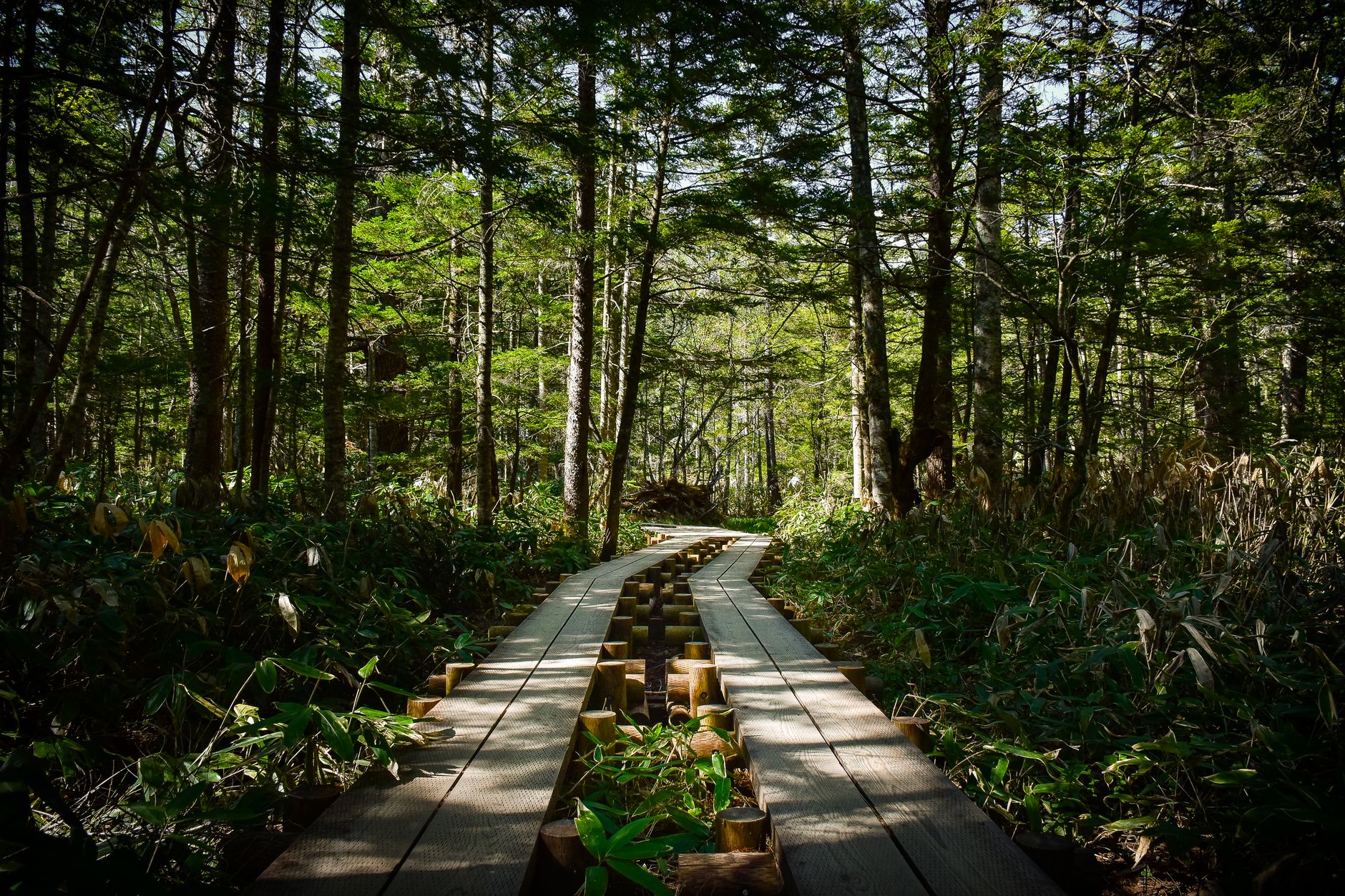
Few places on Earth carry as much weight as Aokigahara. Tucked at the northwestern base of Mount Fuji in Yamanashi Prefecture, this ancient forest has captivated and unsettled visitors for centuries. Its dense canopy, volcanic rock floor, and near-total silence have made it one of the most mythologised landscapes in Japanese culture — and one of the most misunderstood places in the world.
Before you step into LOST SG's Aokigahara 2.0 escape room, it's worth understanding what makes this forest so genuinely extraordinary. The history behind it isn't just spooky folklore — it's a layered story of geology, mythology, literature, and the very human tendency to project our fears onto wild, unknowable places.
A Forest Born from Fire
Aokigahara didn't grow slowly over millennia the way most forests do. It was born violently, from the eruption of Mount Fuji in 864 CE — an event known as the Jōgan eruption. Lava poured across the landscape, burying the terrain in thick basaltic rock. Over centuries, trees took root in the cracks and crevices, eventually forming a dense woodland that stretches across roughly 35 square kilometres.
The result is a forest unlike almost any other. The ground beneath your feet isn't soil — it's hardened lava, riddled with caves, tunnels, and cavities. Tree roots twist around rock formations rather than burrowing into earth. The entire landscape feels slightly wrong, like nature following rules you weren't taught.
This geological strangeness has a practical consequence: compasses behave erratically in Aokigahara. The volcanic rock contains high concentrations of magnetic iron, which disrupts magnetic fields. Hikers who enter without proper navigation tools can find themselves walking in circles. The forest doesn't want you to leave — or so the legends say.
The Mythology: Yūrei, Demons, and the Underworld
Long before Western media discovered Aokigahara, it held a dark place in Japanese mythology. The forest was said to be home to yūrei — the restless spirits of the dead, particularly those who died with unresolved grief or rage. In Shinto belief, the manner and circumstances of death matter enormously. A soul that departs in anguish may linger, unable to move on.
Aokigahara's association with the spirit world predates modern history. Some scholars trace it back to ancient practices of ubasute — a semi-mythological custom in which the elderly or infirm were allegedly abandoned in remote places during times of famine. Whether ubasute was ever widely practised or primarily a literary motif is still debated, but the stories attached Aokigahara to themes of abandonment and unquiet death.
The forest also appears in Japanese Buddhist cosmology as a liminal space — a threshold between the living world and something else. Its silence, its disorienting geography, and its sheer density made it a natural canvas for these beliefs. Trees grow so thickly that on overcast days, the interior can feel like permanent twilight.
Seichō Matsumoto and the Literary Shadow
The modern association between Aokigahara and death was significantly shaped by a 1960 novel: Kuroi Jukai (Black Sea of Trees) by Seichō Matsumoto. In the story, two lovers end their lives in the forest. The book was enormously popular in Japan, and its romanticised portrayal of the forest as a place of final refuge had a lasting cultural impact.
This is a critical piece of context that often gets lost in Western retellings. The forest's contemporary reputation wasn't born purely from ancient superstition — it was substantially amplified by a mid-20th-century work of fiction. Literature shaped reality. The name Jukai — Sea of Trees — comes from this literary tradition, describing how the forest canopy looks from above: an endless, wave-like expanse of green.
What the Forest Is Actually Like
Visitors who enter Aokigahara on marked trails often describe something more subtle than outright terror. The forest is genuinely beautiful in places. Shafts of light filter through the canopy. Moss covers everything in vivid green. There are ice caves and wind caves open to tourists, formed by the same lava flows that created the forest.
But there is something undeniably strange about the atmosphere. The density of the trees muffles sound almost completely. Wind doesn't penetrate the interior the way it does in ordinary woodland. Birds are fewer here than in comparable forests. The quiet is not peaceful — it's thick, almost pressurised.
Japanese authorities and local volunteers have worked for decades to address the forest's association with tragedy, including posting signs encouraging visitors to seek help and conducting regular patrols. The conversation around Aokigahara in Japan is far more compassionate and community-focused than the sensationalised version that circulates internationally.
Aokigahara in Global Culture
Aokigahara has appeared in films, video games, podcasts, and countless internet articles — often stripped of its Japanese cultural context and repackaged as pure horror content. This has frustrated many Japanese commentators, who feel the forest's real complexity — its geological wonder, its literary history, its community significance — gets flattened into a single grim narrative.
The most respectful engagements with Aokigahara acknowledge all of it: the beauty, the strangeness, the mythology, the literature, and the very real human stories attached to the place. It is not simply a "haunted forest." It is one of the most geologically unique landscapes in Japan, a site of profound cultural meaning, and yes — a place that has accumulated genuine darkness over centuries.
How LOST SG Translates This Into an Escape Room
LOST SG's Aokigahara 2.0 draws on the atmospheric and mythological dimensions of the real forest to create Singapore's most intense escape room experience. Set within the Sea of Trees itself, the room leans into what makes Aokigahara genuinely unsettling: the disorientation, the silence, the sense that the environment itself is working against you.
The room features jump scares and atmospheric horror — but no live actors. This is a deliberate design choice that mirrors the real forest experience: the fear in Aokigahara isn't a person jumping out at you. It's the place itself. The puzzles are advanced-level, demanding sharp thinking even when your nerves are stretched. You have 60 minutes to find your way out, and the room accommodates 2 to 12 players — all in a fully private session, so it's just your group and the forest.
For players who want to understand more about the design philosophy behind this kind of immersive experience, Aokigahara: Inside Singapore's Scariest Escape Room goes deeper into what makes this room work. And if you're preparing your team's strategy before entering, Advanced Escape Room Strategies for Experienced Players in Singapore is essential reading — Aokigahara 2.0 rewards players who come in with a plan.
If you're visiting for the first time and want to understand what to expect from the escape room format in general, the First-Timer's Complete Guide to Escape Rooms in Singapore is a great starting point before you tackle the forest.
Should You Enter the Forest?
Whether you're drawn to Aokigahara out of curiosity, a love of Japanese history, or a genuine appetite for fear, the experience at LOST SG is designed to be challenging, atmospheric, and — most importantly — something you walk away from talking about for a long time.
The real Aokigahara is a place of layered meaning: geological wonder, literary legacy, cultural mythology, and human complexity. The escape room honours that complexity by refusing to make it simple. It's not just a haunted house. It's an environment that demands your full attention, your composure, and your willingness to sit with discomfort.
That's exactly what the real Sea of Trees has always asked of those who enter it.
Frequently Asked Questions
Q: Is the Aokigahara escape room at LOST SG suitable for people who don't like horror?
A: Aokigahara 2.0 is LOST SG's only horror-themed room and does include jump scares. If you prefer a non-horror challenge, LOST SG has four other rooms at varying difficulty levels — including beginner-friendly Mausoleum 2.0 and the advanced Castiglione Heist 2.0. That said, there are no live actors in Aokigahara 2.0, which many players find more manageable than actor-based scare rooms.
Q: How accurate is the escape room to the real Aokigahara forest?
A: The room draws on the atmosphere, mythology, and disorienting qualities of the real forest rather than attempting a literal recreation. The design captures what makes Aokigahara genuinely unsettling — the silence, the sense of being lost, the layered folklore — while translating it into a puzzle-based experience.
Q: Where is LOST SG located, and how do I get there?
A: LOST SG is located at GR.iD, 1 Selegie Road, #B1-03/04, Singapore 188306. The nearest MRT stations are Dhoby Ghaut (CC1/NE6/NS24), Little India (NE7/DT12), and Bencoolen (DT21). You can book online at bookeo.com/lostsg or call +65 6717 1688.
Q: How difficult is Aokigahara 2.0 compared to other rooms at LOST SG?
A: Aokigahara 2.0 is rated Advanced — the highest difficulty tier at LOST SG, shared with Castiglione Heist 2.0. It's recommended for players who have some escape room experience and are comfortable with horror elements. First-timers who want to build confidence might consider starting with Mausoleum 2.0 or Alcatraz Breakout 2.0.
Q: What is the real Aokigahara forest, and where is it?
A: Aokigahara is a 35-square-kilometre forest located at the northwestern base of Mount Fuji in Yamanashi Prefecture, Japan. It formed from lava flows following the Jōgan eruption of 864 CE and is known for its dense canopy, volcanic rock terrain, magnetic anomalies, and deep roots in Japanese mythology and literature.