Aokigahara: Inside Singapore’s Scariest Escape Room
Step inside Aokigahara — Singapore's scariest horror escape room. Discover what makes it terrifying, who it's for, and how to survive it.
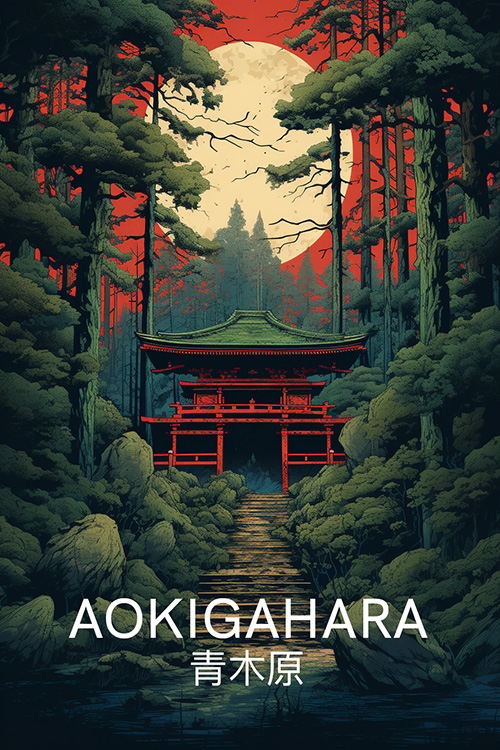
There’s a moment, somewhere in the dark, when you stop thinking about puzzles.
Your heartbeat is loud. The air feels wrong. Something moves at the edge of your vision, and your brain — the rational, puzzle-solving part — goes completely offline. That’s the moment Aokigahara was designed to create. And it delivers, reliably, every single time.
If you’ve been searching for a horror escape room in Singapore that actually frightens you rather than just dimming the lights and playing spooky music, this is the one people keep coming back to talk about. Here’s what’s inside, what makes it work, and whether you’re ready for it.
The Real Aokigahara — And Why It Was Chosen
Aokigahara is a real forest at the base of Mount Fuji in Japan. Dense, silent, and disorienting — it’s a place where compasses behave strangely due to volcanic rock beneath the soil, and where the tree canopy is so thick that wind and sound barely penetrate. It has a long, dark history in Japanese folklore, tied to spirits and the supernatural long before Western media discovered it.
LOST SG didn’t choose the name for shock value. The forest’s mythology — its stillness, its disorientation, its sense that the normal rules don’t apply — maps perfectly onto what a horror escape room should feel like. You’re not just solving puzzles in a dark room. You’re navigating a space where your instincts feel unreliable.
That thematic grounding is what separates Aokigahara from a room that simply uses jump scares as a shortcut.
What to Expect Inside the Room
The Atmosphere Comes First
From the moment you enter, the environment does the heavy lifting. The set design, sound design, and lighting work together to create a sustained sense of unease rather than a series of isolated frights. There’s no single “scare moment” — the tension is constant and cumulative.
This is harder to pull off than it sounds. Most haunted attractions rely on novelty: the first scare is effective, the second less so, and by the third you’ve recalibrated. Aokigahara is built to prevent that recalibration. The room keeps you slightly off-balance throughout.
The Puzzles Are Woven Into the Horror
Here’s something that gets overlooked in reviews of horror escape rooms: if the scares and the puzzles feel like separate things — like the designer couldn’t decide what kind of room to make — neither element lands properly.
In Aokigahara, the puzzles are embedded in the environment. You’re not pausing the horror to solve a logic puzzle and then resuming. The investigation is the horror. What you’re looking for, and what you find, feeds directly into the atmosphere.
That integration is what makes the room genuinely difficult. Your problem-solving ability is actively working against the emotional state the room is trying to induce. Staying calm enough to think clearly is itself a challenge.
The Difficulty Level
Aokigahara is rated as one of LOST SG’s most challenging rooms — not just because of the fear factor, but because of the puzzle complexity. Groups who’ve done several escape rooms before and consider themselves experienced players still find this one demanding.
If you’re new to escape rooms, it’s worth noting that LOST SG offers rooms across the difficulty spectrum. Jumping straight to Aokigahara without any prior experience is possible, but you’ll have a better time if you’ve got a few rooms under your belt.
Who Is Aokigahara For?
Horror Enthusiasts Who’ve Been Disappointed Before
If you love horror films, haunted houses, and scary experiences — but you’ve tried escape rooms that felt more “Halloween decoration” than genuinely frightening — Aokigahara is specifically for you. It’s built for people who want to be actually scared, not mildly spooked.
The room has a reputation in Singapore’s escape room community for being the real thing. That reputation is earned.
Experienced Escape Room Players Looking for a Challenge
Even if horror isn’t your primary motivation, Aokigahara offers a genuinely difficult puzzle experience. The combination of atmospheric pressure and puzzle complexity creates a challenge that’s different in kind from a straightforward logic-heavy room. Your team will need to communicate well, stay focused under pressure, and manage the instinct to rush.
Groups Who Want a Memorable Shared Experience
There’s a particular kind of bonding that happens when a group of people go through something genuinely frightening together. The shared adrenaline, the moments of collective panic, the relief at the end — these make for stories that get retold. If you’re looking for something more memorable than a standard night out, this delivers.
How to Survive It: Practical Advice
Stay Verbal
Fear makes people go quiet. That’s the worst thing you can do in an escape room. Keep talking — describe what you’re seeing, what you’re touching, what you’re thinking. Your teammates can’t help you process information they don’t have.
Assign Someone to Stay Calm
Designate one person, before you go in, whose job is to be the anchor. When the room is doing its job and everyone’s adrenaline is spiking, this person’s role is to slow things down, restate what you know, and keep the group focused on the next step.
Don’t Be Too Proud to Ask for Help
LOST SG’s game masters are there to help. If your group is genuinely stuck — not just panicking, but actually stuck — ask the game master for hints. Using a hint doesn’t diminish the experience. Getting stuck for 20 minutes in the dark while your nerves fray, on the other hand, can.
Manage Your Group Size Thoughtfully
Aokigahara accommodates groups of two to twelve players. Smaller groups feel more vulnerable (which amplifies the horror) but can communicate more easily. Larger groups have more collective problem-solving power but can get chaotic when fear kicks in. There’s no universally right answer — think about your group’s dynamic.
A Note on Content
Aokigahara is a horror room. It is designed to be frightening and contains themes consistent with that. LOST SG recommends it for players 16 and above. If anyone in your group has a serious aversion to horror content, claustrophobia, or anxiety triggered by dark environments, it’s worth having that conversation before booking rather than after.
The room does not use live actors or physical contact — the horror is environmental and psychological rather than confrontational. For many players, that makes it more effective, not less.
Booking Aokigahara
Aokigahara runs at LOST SG’s space a 1 Selegie Road. Sessions run regularly throughout the week, including evenings and weekends.
Slots fill up, particularly on weekends and around public holidays. If you have a specific date in mind, book your session in advance rather than hoping for walk-in availability.
FAQ
Q: Is Aokigahara suitable for first-time escape room players?
A: It’s possible. Aokigahara is one of LOST SG’s most difficult rooms, and the horror atmosphere adds an extra layer of pressure on top of the puzzle complexity. If you’re new to escape rooms, consider starting with a less intense room to get comfortable with the format before tackling this one.
Q: Does Aokigahara use jump scares?
A: The room’s horror is primarily atmospheric and psychological — sustained tension rather than isolated jump scares. That said, the experience is designed to be genuinely frightening, and moments of surprise are part of that. Expect to be scared; the method is just more sophisticated than a single loud noise.
Q: How long does the Aokigahara session last?
A: Sessions at LOST SG run for 60 minutes of in-room time. Arrive a few minutes early for your briefing. The full visit, including briefing and debrief, typically takes around 75–90 minutes.