The Looting of the Old Summer Palace: The Real Story Behind China's Missing Zodiac Heads
How a Jesuit painter, a Qing emperor's fountain and the 1860 sack of the Old Summer Palace created one of the art world's longest hunts.
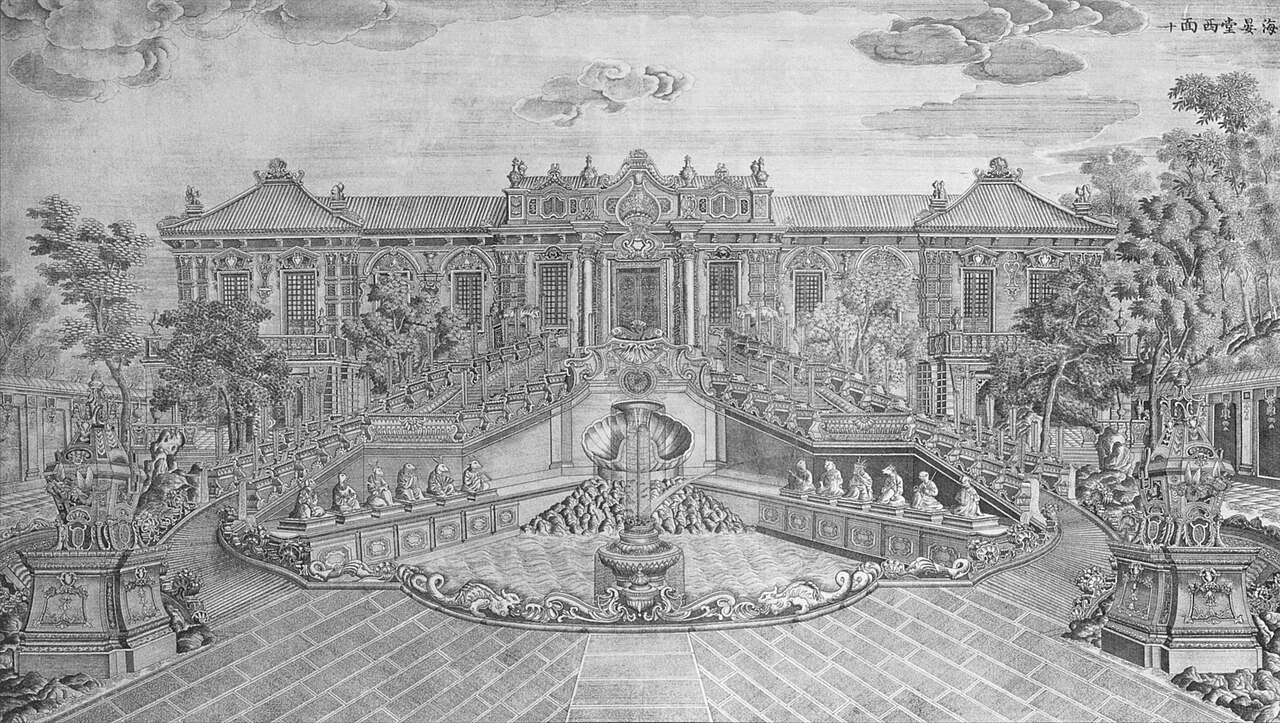
Somewhere in the world, possibly in a private collection, possibly melted down long ago, are five bronze animal heads: a dragon, a snake, a goat, a rooster and a dog. They once spouted water in an emperor's garden outside Beijing.
Their story runs from a Milanese painter's workshop to the smoke of 1860 and on to the auction houses of Hong Kong and Paris. It is one of the strangest tales in the history of art, and it is still unfinished.
A Jesuit at the Qing Court
Giuseppe Castiglione was born in Milan in 1688 and joined the Jesuits as a lay brother. He arrived in China in 1715, part of a long line of missionaries who found that the surest way into the imperial court was through useful skills: astronomy, mathematics, clockmaking and painting.
He never really left. Castiglione served three emperors, Kangxi, Yongzheng and Qianlong, and took the Chinese name Lang Shining. He spent the rest of his life in Beijing and died there in 1766.
His real achievement was a hybrid style. He brought European shading and perspective into Chinese painting, while working on silk and in formats the court understood. His horses look solid enough to step off the scroll, yet the compositions belong unmistakably to the Qing world. Court painters learned from him, and the emperors trusted him with portraits of themselves.
The European Palaces of Yuanmingyuan
Yuanmingyuan, known in English as the Old Summer Palace, was a vast complex of gardens, lakes and pavilions north-west of the Forbidden City.
Qianlong was curious about European things, and fountains in particular caught his imagination. From the late 1740s, a section of the gardens was given over to Western-style buildings, the Xiyang Lou. Castiglione is credited with much of the architectural design, while the French Jesuit Michel Benoist worked out the hydraulics that made the waterworks function.
The result was baroque Europe filtered through Chinese eyes: stone facades, mazes, terraces and fountains, built for an emperor who would never travel to see the originals.
The Zodiac Water Clock
The centrepiece was the fountain in front of the Haiyantang, the Hall of Peaceful Seas. Arranged around a pool sat twelve figures with human bodies and bronze heads, one for each animal of the Chinese zodiac.
It was a clock as well as a fountain. The traditional Chinese day was divided into twelve two-hour periods, each linked to a zodiac animal. Each head is said to have spouted water in turn during its own period, and at noon all twelve flowed together.
Look closely at the surviving heads and you can see the meeting of two traditions. The modelling is naturalistic in the European manner: the folds of an ox's neck, the fur on a monkey's brow. But the concept, the cycle of animals marking time, is entirely Chinese. It is the same hybrid that Castiglione and Benoist brought to the court, rendered in bronze and water.
1860: Fire Over the Gardens
A century later, China was at war with Britain and France in what is now called the Second Opium War. In October 1860, Anglo-French forces reached Yuanmingyuan and looted it. Soldiers carried off porcelain, jade, silk, clocks and anything else they could move.
Days later, the British High Commissioner to China, Lord Elgin, ordered the palace burned, in retaliation for the torture and killing of British, French and Indian prisoners, including the journalist Thomas Bowlby, by Qing forces. The fires burned for days. Victor Hugo, in a letter the following year, wrote that "two bandits entered the Summer Palace."
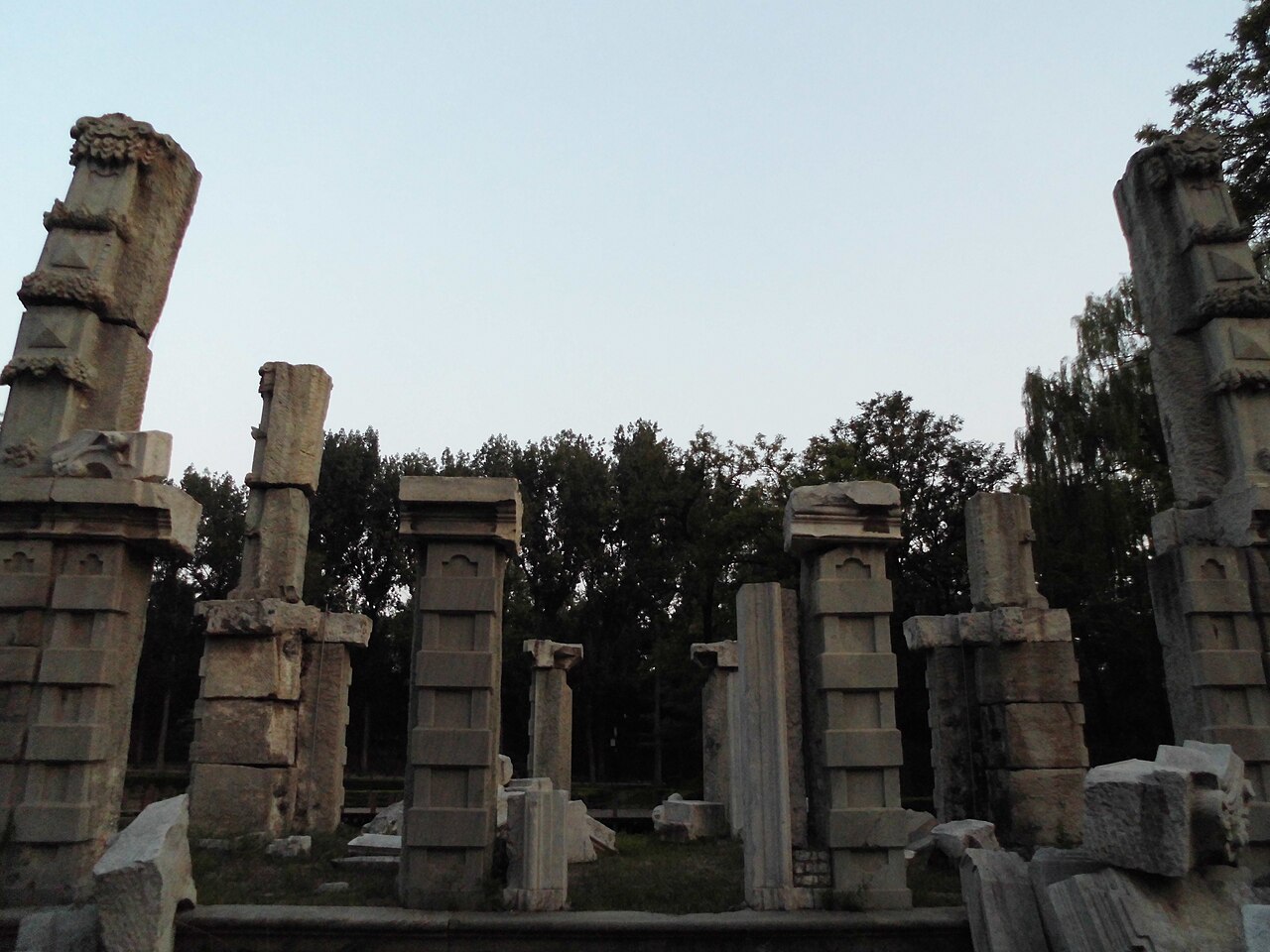
The zodiac heads were carried off in that 1860 looting. The European palaces, built partly of stone but mainly on a timber framework, burned with the rest, and it is their stone remains that survive best today.
The Hunt to Bring Them Home
For much of the twentieth century, the heads were curiosities in Western collections. That changed as China's wealth and confidence grew, and the twelve animals became a powerful symbol of what the country had lost.
The turning point came in 2000, when the ox, monkey and tiger heads came up for auction in Hong Kong and were bought by China Poly Group. They are now in the Poly Art Museum in Beijing. In 2003, the Macau businessman Stanley Ho bought the pig head and donated it to the same museum.
Ho also bought the horse head in 2007. He later donated it to the state, and in 2020 it went on display at Yuanmingyuan itself, the first of the heads to return to the site it was made for.
The most dramatic episode came in 2009. The rat and rabbit heads appeared at a Christie's sale in Paris from the collection of Yves Saint Laurent and Pierre Bergé. China protested the sale. The winning bidder, Chinese collector Cai Mingchao, then announced he would not pay, calling it an act of patriotism. In 2013, the Pinault family, which owns Christie's, bought the pair and returned them to China. They are now held by the National Museum of China.
The Five Still Missing
That makes seven heads accounted for. The dragon, snake, goat, rooster and dog remain unlocated. Rumours surface from time to time, and replicas turn up often enough to make dealers cautious, but none of the five originals has been publicly confirmed.
The search has spilled into popular culture. Jackie Chan's 2012 film CZ12 built its plot around recovering the heads. The artist Ai Weiwei created his own oversized set, Circle of Animals/Zodiac Heads, which toured internationally and asked awkward questions about what counts as national treasure, and who gets to decide.
Meanwhile, at Yuanmingyuan, the ruins of the European palaces are left largely as they were: broken columns and carved stone lying in the grass. The Chinese government has chosen to preserve them as a reminder, rather than rebuild.
Why the Story Still Grips Us
Part of the appeal is the sheer improbability of it. Two Jesuits, an Italian painter and a French engineer, design a clock for a Chinese emperor, European soldiers destroy the garden around it, and the pieces spend over a century passing between collectors before governments and billionaires start bidding to bring them home.
It is also a puzzle with missing pieces, quite literally. Five objects, documented in old engravings, cast in bronze, heavy and distinctive, and yet nobody can say where they are. If you have ever loved a mystery, that gap is hard to resist.
If you want to read more about Castiglione himself, our earlier piece A Journey Through Time: The Castiglione Experience looks at the man behind our room. For another chapter in the long history of treasures leaving their homes, try Tomb Raiders: The History of Grave Robbing in Ancient Egypt.
Step Into the Heist
This history is what inspired Castiglione Heist 2.0, our 18th-century China art heist. It is rated Advanced, runs for 60 minutes and takes 2 to 12 players, and like all our rooms it is fully private, so your group never plays with strangers. It suits teams who have a few escape rooms behind them and want to be properly tested.
You can see it alongside our other four rooms on our games page. When you are ready, book a slot at bookeo.com/lostsg, or drop by GR.iD at 1 Selegie Road, a short walk from Dhoby Ghaut, Little India or Bencoolen MRT. The zodiac heads may still be missing, but you have 60 minutes to find what you came for.