How Real Spies Hid Secret Messages: Tradecraft That Inspired Escape Room Puzzles
Invisible ink, dead drops, book ciphers and microdots: how real spies hid messages, and how the same tricks turn up as escape room puzzles.
Espionage was never really about gadgets. It was about one stubborn problem: getting a few words from one person to another without anyone else noticing. Almost every trick in the spy's toolkit is an answer to that problem.
If you have ever stood in an escape room staring at a sheet of paper that seems completely blank, you have already met some of those answers. Here is where they came from, and how to recognise them when they turn up in a puzzle.
Hiding vs scrambling: the two big ideas
Secret communication splits into two families. Cryptography scrambles a message so that anyone who intercepts it cannot read it. Steganography hides the message so that nobody realises it exists in the first place.
The Greek historian Herodotus tells of Histiaeus, who shaved a messenger's head, tattooed a message on his scalp and waited for the hair to grow back before sending him off. Whether every detail is true or not, the principle is sound: a message nobody looks for is a message nobody intercepts. The best spies, and the best puzzle designers, often combine both families.
Invisible ink: the blank page that isn't
The oldest trick is also the simplest. Certain liquids, such as lemon juice or milk, dry almost clear and turn brown when the paper is gently heated. Children still learn this at school, and for a long time spies relied on much the same chemistry.
During the American Revolution, George Washington's Culper spy ring used a more sophisticated invisible ink developed by James Jay. It stayed invisible until a second chemical was brushed over it, which meant heat alone would not give the game away. By the First World War, inks had become an arms race: agents developed new formulas, and censors developed new tests to expose them.
In an escape room: heat is rarely practical, so the modern equivalent is usually light. A torch, a filter or a specific lamp might reveal writing you walked past five minutes ago. The lesson spies learned applies directly: a blank surface is only blank until you have tried looking at it differently.
Book ciphers: the key is on the shelf
A book cipher is beautifully low-tech. Sender and receiver agree on the same edition of the same book. The message is then written as a string of numbers, each pointing to a page, a line and a word. To anyone without the book, it is meaningless arithmetic.
One of history's most famous traitors relied on this method. Benedict Arnold, the American general who plotted to hand West Point to the British, corresponded with British officer John André using book ciphers keyed to standard reference works of the day. The strength of the system is also its weakness: the cipher is only as secret as the choice of book.
In an escape room: if you find groups of two or three numbers and there is a book, letter or document lying around, you are probably looking at some version of this. Try page, line, word. If that fails, try line, word, letter. Designers love the moment when an innocent prop on a shelf turns out to be the key.
Dead drops: never meet, never get caught
Meeting a contact in person is dangerous. Someone might be watching either of you. The dead drop solves this: one agent leaves an item in an agreed hiding place, and the other collects it later. They never need to be in the same place at the same time.
Dead drops usually came with a signal. Aldrich Ames, the CIA officer who spied for the Soviet Union, used chalk marks on a mailbox in Washington to indicate that a drop was ready. FBI agent Robert Hanssen used a hiding spot under a footbridge in a Virginia park, which is where he was arrested in 2001.
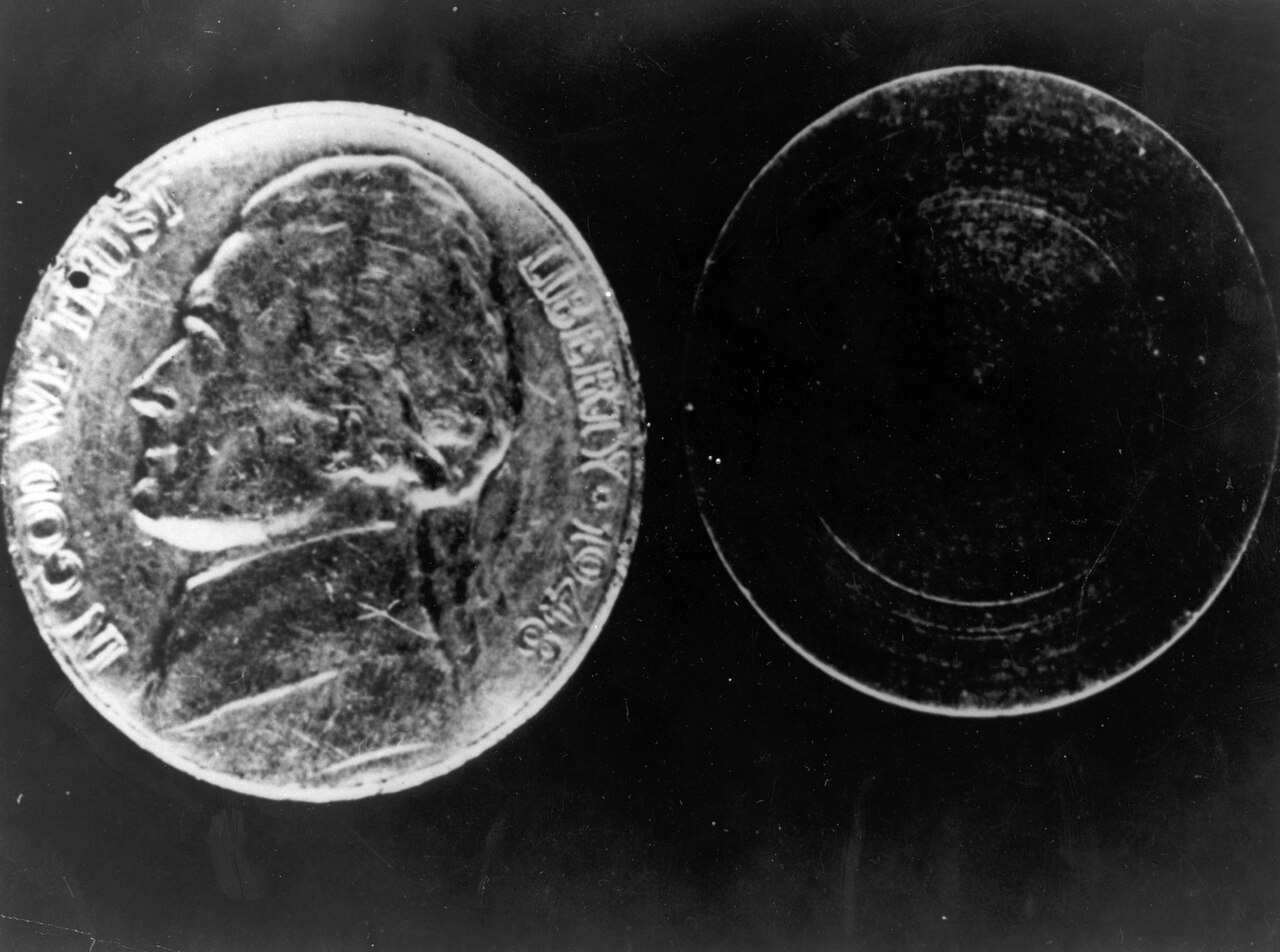
Containers were just as clever. In 1953, a newspaper delivery boy in Brooklyn dropped a coin and watched it split open. Inside the hollow nickel was a tiny piece of microfilm, a find that eventually fed into the investigation of Soviet spy Rudolf Abel. Hollow coins were standard kit.
In an escape room: this is the hidden compartment, the object that rattles when it shouldn't, the mark on the wall that looks decorative but is really telling you where to search. If something seems slightly out of place, treat it the way a counter-intelligence officer would: assume it is there for a reason.
Microdots: a page the size of a full stop
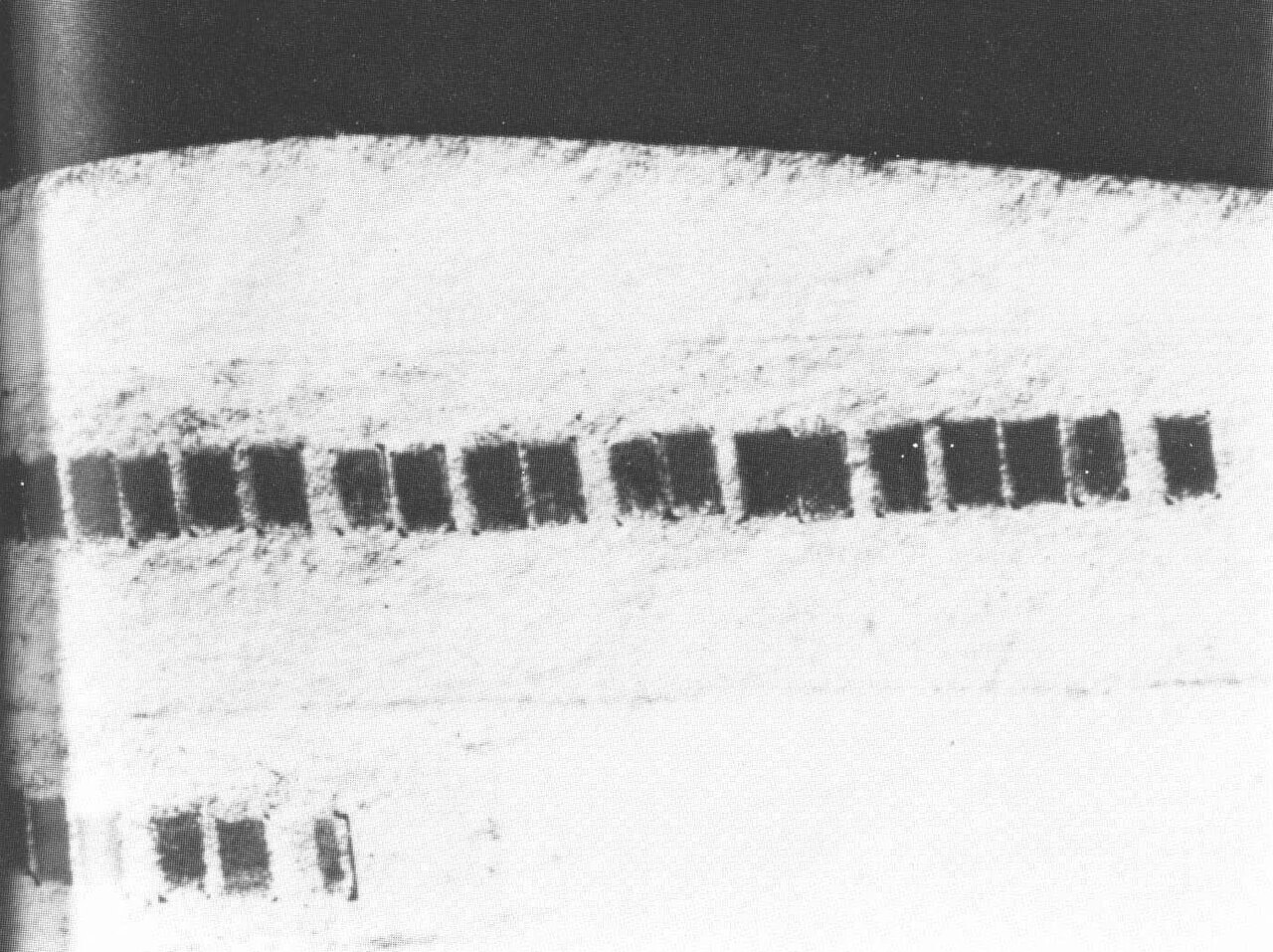
Microdots took steganography to an extreme. Using photographic reduction, a full page of text could be shrunk to a dot roughly the size of a full stop, then glued into an ordinary letter in place of real punctuation. German intelligence made notable use of the technique during the Second World War.
The genius was that the carrier letter could be completely harmless. A censor would read a dull note about the weather and wave it through, never knowing that one of the full stops held a page of instructions. The receiver needed only the knowledge of where to look.
In an escape room: the equivalent is tiny print, details hidden inside a larger image, or a clue that only makes sense under magnification. When a room hands you a magnifying glass, it is not decoration.
Thinking like a handler
Spy tradecraft teaches habits that translate neatly into better escape room play:
- Question the obvious. Spies relied on people not looking twice. Look twice.
- Look for pairs. A cipher needs a key, a lock needs a code, a signal needs a hiding place. If you have one half, someone in the room may already be holding the other.
- Keep a shared record. Handlers logged every signal. Your team should call out every number, symbol and odd object so nothing gets lost.
- Separate hiding from scrambling. First ask "where is the message?", then ask "what does it say?"
For a broader look at the puzzle formats you are likely to meet, read Escape Room Puzzles Explained: What To Expect Inside, and for pattern-spotting practice, try Crack The Code Using These Commonly Used Patterns.
Try it yourself
Reading about tradecraft is one thing. Doing it against a ticking clock, with your friends shouting numbers at you, is quite another.
If the spy angle appeals, Exodus 2.0 is our high-energy secret mission at intermediate difficulty. Groups who prefer planning a careful theft can take on Castiglione Heist 2.0, an advanced 18th-century China art heist. You can see all five rooms on our games page. Every room is fully private for 2 to 12 players, runs for 60 minutes, and pricing starts from $23.90 per person.
We are at GR.iD, 1 Selegie Road, a short walk from Dhoby Ghaut, Little India and Bencoolen MRT, and open daily from 10:00am (last game at 9:30pm). When you are ready to go undercover, you can book at bookeo.com/lostsg. No chalk marks on mailboxes required.