Did Egyptian Tombs Really Have Booby Traps? Myth vs Reality
Rolling boulders and spike pits? Here's how ancient Egyptians really protected their tombs: granite plugs, false passages, hidden shafts and curses.
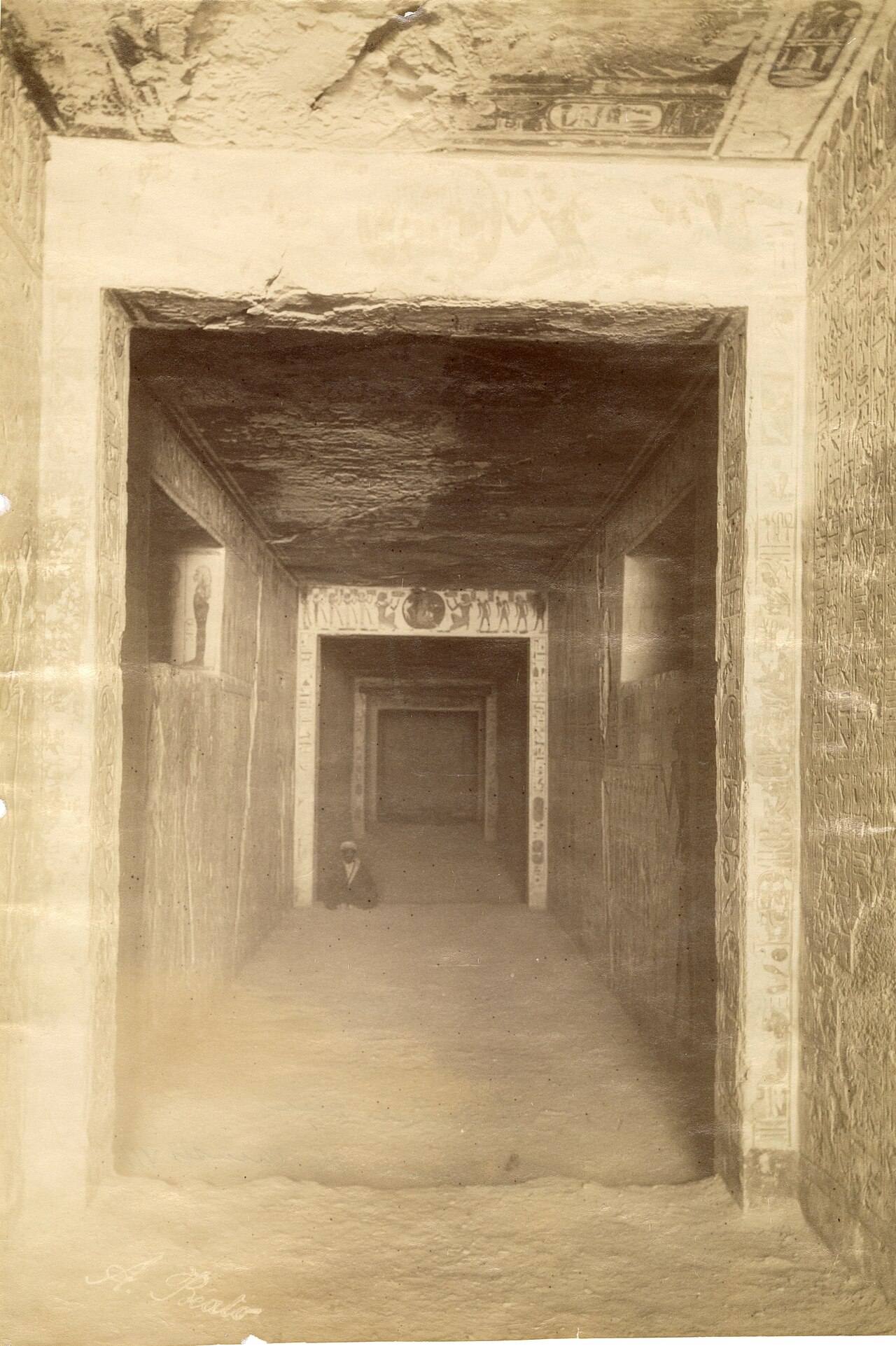
Every tomb-raiding film follows the same script. Someone steps on the wrong flagstone, a click echoes through the dark, and the walls start closing in. It makes for great cinema. It also has almost nothing to do with how the ancient Egyptians actually protected their dead.
The truth is less flashy but more interesting. Egyptian builders relied on weight, concealment, misdirection and the threat of divine punishment. Here is how the myth compares with the reality.
The Hollywood version
On screen, Egyptian tombs are deadly machines. Floors collapse into pits of spikes. Sand pours from the ceiling. Hidden blades swing out of the walls, and mummies rise to finish off anyone who survives.
Archaeologists have found no convincing evidence of spring-loaded or pressure-triggered traps of this kind. Spike pits and swinging blades simply do not turn up in the record.
So where did the idea come from? Partly from the sheer scale of the real defences, which look like they were built to stop an army. Partly from the stories that grew around famous excavations. And partly because "he tunnelled around a very heavy rock" is a harder sell at the box office.
Granite plugs and stone portcullises
The most common defence was brute mass. Builders sealed passages with enormous blocks of stone, often granite.
The Great Pyramid of Khufu at Giza is the classic example. Its ascending passage was blocked with granite plug blocks slid into place from above. Those plugs are still there today. The tunnel that visitors now use to enter the pyramid was dug through the surrounding stone to get around them, a forced entry traditionally credited to workers of the Caliph al-Ma'mun in the 9th century.
Other Old Kingdom pyramids used sliding stone portcullises: heavy slabs lowered into grooves to seal a corridor once the burial was complete. None of this was a trap in the Hollywood sense. Nothing moved once the tomb was closed. The idea was to make getting in so slow and exhausting that robbers would give up.
False passages and dead ends
Some builders went further and tried to outwit intruders rather than simply outlast them. The pyramid of Amenemhat III at Hawara, from the Middle Kingdom, is the best-known case.
Its interior included passages that led nowhere, hidden trapdoors in the ceiling that concealed the real route onwards, and blocks that had to be shifted to continue. The burial chamber itself was carved from a single massive block of quartzite and roofed with massive quartzite slabs.
It is genuinely ingenious design. It is also a reminder that ingenuity has limits. When the archaeologist Flinders Petrie finally reached the chamber in the 19th century, robbers had long since beaten him to it.
Hidden shafts
Many New Kingdom royal tombs in the Valley of the Kings feature a deep vertical shaft cut across the main corridor, often called the "well". Walk the corridor in the dark and you would find yourself at the edge of a sudden drop.
This is the closest thing to a real booby trap, but its purpose is still debated. The shaft may have been meant to stop intruders, or to catch the flash floods that occasionally swept through the valley. It may also have taken on a religious or magical meaning. Quite possibly it did all three.
What it was not was a disguised pit lined with stakes. It was a visible obstacle, and a determined robber with a rope or a plank could cross it.
Hiding in plain sight
By the New Kingdom, the pharaohs had learnt a hard lesson. A pyramid is a giant sign saying "treasure here". So royal burials moved to the Valley of the Kings near Thebes, where tombs were cut into the rock and their entrances concealed.
The necropolis was also patrolled. Surviving court records, known today as the Tomb Robbery Papyri, describe investigations into thefts from royal tombs during the reigns of Ramesses IX and Ramesses XI. The accused were questioned, sometimes violently, and some confessed. For the full story of who robbed the tombs and how, read our piece on the history of grave robbing in ancient Egypt.
When even this failed, priests took a practical step: they gathered many royal mummies and reburied them together in hidden caches. Some of the most famous pharaohs were found not in their own tombs but in these secret group burials, discovered thousands of years later.
The curse: the defence that lived longest
If there is one trap that really existed, it was a psychological one. Some tombs, particularly private tombs of officials from the Old Kingdom, carry inscriptions warning visitors not to enter impure or damage the burial.
The threats could be vivid. Some promise that the tomb owner will seize the intruder's neck like a bird's, or that the offender will be judged before the great god. To a society that took the afterlife seriously, these were not empty words.
Tutankhamun's tomb had no curse inscription at all, despite the headlines that followed Howard Carter's discovery in 1922. We unpack how that legend took hold in The Curse of Tutankhamun: What Really Happened to Howard Carter's Team.
So did any of it work?
Mostly, no. Nearly every major royal tomb in Egypt was robbed in antiquity, sometimes by people who had helped build or seal it. Even Tutankhamun's tomb shows signs of being broken into and resealed in ancient times.
That is perhaps the real lesson. The Egyptians did not lack imagination. They tried mass, mazes, concealment, guards and gods. But the people most likely to rob a tomb were the ones who knew exactly how it had been built.
Playing tomb raider, with a safety net
Part of the appeal of the Hollywood tomb is the fantasy of being the clever one: spotting the hidden route, reading the warning on the wall, getting to the chamber first. That is exactly the itch an escape room scratches, minus the spikes.
Our Mausoleum 2.0 room is a beginner-level Ancient Egypt tomb mystery for 2 to 12 players. Like all our rooms, it runs for 60 minutes and is fully private, so your group never plays with strangers. Have a look at all five on our games page.
If you fancy testing whether you would have made a better tomb robber than the ones who tunnelled around Khufu's granite plugs, you can book a slot at bookeo.com/lostsg, or drop by GR.iD on Selegie Road, a short walk from Dhoby Ghaut MRT.